Driving to Disney World: Road Trip Packing List and Car Essentials
A Florida-tested packing list for the drive to Walt Disney World — what to pack for the car, what to skip, and how to handle Florida tolls, snacks, and a 14-hour day on I-75.
Published April 26, 2026 by PixieWire
Affiliate Disclosure
PixieWire uses affiliate links. If you click a link and make a purchase, we may earn a commission at no extra cost to you. We only recommend products and experiences we believe are genuinely useful.
As an Amazon Associate I earn from qualifying purchases.
A road trip to Walt Disney World is a real undertaking. Most families driving in are coming from somewhere between eight and eighteen hours away, and the drive itself sets the tone for the whole vacation — show up tired, sore, and out of patience and you have already lost half a park day. Show up rested and organized and you walk into the resort ready to go.
The list below covers what actually goes in the car for a multi-state drive to Orlando. It is split between the things that earn their space on a regular road trip and the few items that are specific to driving into Florida — the toll-pass section being the biggest one, because the gantries ringing Orlando will charge you whether you came prepared or not. Skip the toll section if you live in Florida already and have a SunPass; the rest of the list applies to any long highway drive.
For what to pack once you arrive at the parks, see the Disney World park bag essentials guide.
Table of Contents
- Driver Comfort and Posture
- Passenger Comfort and Sleep
- Cooler, Snacks, and Drinks
- Navigation, Charging, and Phone Mounts
- Kid Entertainment That Survives Hour Eight
- Florida Tolls: One Pass for the Whole Drive
- Car Maintenance and Roadside Safety
- Cleanup, Trash, and the Stuff You Forget
- What to Leave Home
- Frequently Asked Questions
- Recommended Products
Driver Comfort and Posture
A 12-hour drive is a posture problem more than anything else. Lower-back pain and a numb tailbone show up around hour six and never leave, which is why a lumbar cushion and a seat cushion are the two cheapest upgrades you can make to a long drive. A memory-foam lumbar pillow keeps the small of your back supported against the seat instead of slowly collapsing forward, and a gel seat cushion takes the pressure off your tailbone on stretches where you are not stopping for two-plus hours. Buy them once and they live in the car forever.
The other underrated driver-comfort item is a steering wheel tray. It folds flat in a door pocket and clips to the wheel at rest stops so the driver can actually sit in the car and eat without hunching over the center console. Use it once on a Cracker Barrel stop in Tennessee and you will never drive without one again.
Passenger Comfort and Sleep
Anyone driving more than ten hours should be trading off, which means the off-shift driver needs to actually sleep in the passenger seat. A wraparound neck pillow with back-of-head support — not the cheap U-shape that lets your head fall forward — is the difference between a real nap and forty minutes of head-snapping. Side-sleeper-friendly designs are worth the upgrade if either driver tends to lean against the window.
A small fleece throw blanket lives in the back seat for cold-AC naps and doubles as a hotel-room blanket the night you arrive. Window shades that suction or snap onto the back-seat windows knock the cabin temperature down significantly on west-facing afternoon stretches and keep the sun off kids who are trying to nap. Retractable roller shades are easier to store than the foam-board kind and do not block the driver's view of the side mirrors.
Cooler, Snacks, and Drinks
A cooler in the car saves money two ways: you skip the drive-thru on lunch and you do not pay $4 for a gas station Gatorade. A soft cooler in the 12-can range fits between the front seats or behind the passenger seat and stays cold all day if you pack it right. A larger 28-quart hard-sided cooler in the trunk works better for a family of four planning multiple meals on the road.
The single best cooler tip for a road trip: freeze a case of bottled water at home the night before and use the frozen bottles as ice. They keep the cooler cold for the same length of time as ice, they do not turn into a slosh of melt water in the bottom of the cooler, and as they thaw you have ice-cold drinking water for the next leg of the drive. No drainage, no soggy sandwich bags, no stop to buy a bag of ice in Georgia.
For the snack side, organized beats abundant. A divided snack container with separate compartments — pretzels in one, grapes in another, crackers in a third — keeps kids from grabbing the whole bag and emptying it into the back seat in the first hour. Pack at least one option that is not sugar (cheese sticks, hard-boiled eggs, jerky) so the second half of the drive is not a sugar-crash situation. Refillable water bottles for everyone in the car cut a meaningful amount of plastic and keep the cooler less crowded.
Navigation, Charging, and Phone Mounts
A car phone mount is the single most important item on this list. It is a $20 product that turns your phone into a hands-free GPS, lets you watch your ETA without taking your eyes off the road, and keeps you from holding a glowing screen above the steering wheel. A suction-cup mount that grips the dash or windshield is more reliable than a vent clip — vents bend and crack, and a heavy phone in a thick case will slowly sag the mount over a 12-hour drive.
For charging, every passenger needs their own cable. A multi-port USB charger that plugs into the 12V port covers four devices simultaneously, which matters when two kids, two adults, and a dash cam are all asking for power at the same time. Pack one extra cable in the glovebox as a spare for the cable that will inevitably get lost between the seats.
Download offline maps for the entire route in Google Maps before you leave. Cell coverage on rural stretches of I-75 through southern Georgia and on the I-10 / I-95 corridor through northern Florida is genuinely spotty, and an offline map will reroute you around an accident even when you have one bar.
Kid Entertainment That Survives Hour Eight
The first three hours of a road trip are easy. Hour eight is where a packing list pays off.
A back-seat organizer that hangs on the front seat with a tablet slot and snack pockets is the foundation. The good ones have a clear plastic window for the tablet and side pockets deep enough for a juice box, a small toy, and a pack of wipes. Pair it with a tablet headrest mount if you want both kids to see one shared screen between rows; for everyone watching their own show, individual tablets and volume-limited kid headphones keep the front seat sane.
Screen-free options matter for the parents in the front. License-plate bingo with a shutter-card design — the kind where kids slide a window over each square — works for ages five through ten and does not require a pen that will eventually roll under the seat. Magnetic travel games (chess, checkers, tic-tac-toe) keep pieces from flying every time you brake. For toddlers, reusable water-reveal coloring books are the only car activity that produces zero mess and requires zero charging.
Audiobooks are the underrated win. A long Disney-themed audiobook or a podcast feed with episodes the whole car can listen to turns the back-seat-screen-time argument into a non-issue for two hours at a time.
Florida Tolls: One Pass for the Whole Drive
The drive into Walt Disney World will cross multiple toll roads. I-4 itself is free, but the major routes you will likely use to reach the resort area — Florida's Turnpike, SR 417 (Central Florida GreeneWay), SR 429 (Western Beltway), and SR 528 (Beachline, the Orlando Airport route) — are all tolled, and most of those gantries are now electronic-only with no cash booths. Without a transponder, a camera reads your license plate and the registered owner gets a Toll-By-Plate bill in the mail at the highest rate weeks later.
If you are coming from out of state, the smartest single move you can make is buying a Uni transponder before you leave. Uni is a portable suction-cup transponder issued by Florida's E-PASS, and it covers 19 states from Florida to Maine and west to Minnesota. It is fully compatible with E-PASS, SunPass, LeeWay, PeachPass, NC QuickPass, E-ZPass, RiverLink, and I-PASS, which means one transponder and one prepaid account handles every toll road between New York and Orlando. It also works on every Florida express lane, including the ones marked "SunPass Only" and the I-4 Express lanes through downtown Orlando, and it covers parking at Orlando International Airport (including Brightline) and Port Canaveral Cruise Terminal 3. The Uni costs $14.95 plus tax and you order it directly through an E-PASS account or on Amazon.
For drivers who already have an E-ZPass on the windshield, the Uni is essentially the upgrade that makes your home-state account redundant. Replace the E-ZPass with a Uni, close the old account, and one Uni handles New Jersey to Florida without juggling two transponders. Critical: you can only have one active transponder in the car at a time. Multiple transponders risk getting charged twice for the same toll on the same gantry, so the old E-ZPass either gets removed and the account closed, or the old transponder lives in an RF shield bag while the Uni is the only one reading.
If you are already in Florida or only drive in-state, the SunPass Mini sticker is the cheaper option at $4.99 plus tax with a $10 minimum activation balance. SunPass transponders are sold at thousands of retail locations across Florida — Publix, CVS, Walgreens, and most Florida's Turnpike service plazas. SunPass customers pay the lowest available toll rate and save an average of 25 percent compared to Toll-By-Plate. The catch is that the Mini only works in six states (Florida, Georgia, Kansas, North Carolina, Oklahoma, Texas), so it is not the right pick if you regularly drive through the Northeast corridor.
If you are driving a rental car, check the rental company's toll policy first. Most national brands offer their own toll programs (PlatePass, e-Toll) that bill you the toll plus a daily service fee. The Uni does technically work in a rental — it is portable and you can suction-cup it to any windshield — but you have to update your E-PASS account with the rental's license plate before you drive, and remove the plate again when you return the car. For a one-week rental, the math sometimes favors just paying the rental company's daily fee.
Car Maintenance and Roadside Safety
Most road trips end fine. The handful that do not are usually a tire problem or a dead battery, both of which are solvable in a parking lot if you have the right gear.
A portable lithium jump starter is the single best safety upgrade for a road trip. The pocket-size models put out enough amps to start a V8, do not require a second car, and double as a USB power bank for phones and tablets. Charge it before you leave and keep it in the trunk. The same logic applies to a 12V tire inflator — a flat tire on a rural stretch with no service station for thirty miles becomes a five-minute parking-lot fix instead of a tow. A digital tire pressure gauge is a $10 add-on that catches a slow leak before it becomes a blowout.
A can of Fix-A-Flat lives in the trunk as a backup for the kind of sidewall puncture an inflator will not solve. It is not a permanent repair, but it buys you the miles to reach a tire shop without standing on the shoulder of I-75.
A basic roadside emergency kit covers the rest: jumper cables, a flashlight, reflective triangles, work gloves, and a small first aid kit. Pre-assembled kits are easier than building one piece by piece. Throw in a hard-copy paper map of the southeast in the glovebox; an offline GPS map handles 99% of cases, but the day your phone dies and your charger fails is the day you wish you had it.
Cleanup, Trash, and the Stuff You Forget
The unsexy items are the ones that come up most often. A small trash can with a lid that hangs on the back of a front seat keeps the floor clear for two days instead of becoming a wrapper graveyard by lunch. A roll of paper towels lives in the trunk. Disinfecting wipes handle gas-station-bathroom hands and sticky kid fingers without a stop. A box of gallon Ziploc bags solves a dozen problems no one expects — wet swimsuits at a hotel pool stop, a phone in a sudden Florida downpour, a half-eaten bag of chips someone wants to save for later.
Pack a roll of regular kitchen trash bags too. At every gas stop, the front-seat passenger walks the trash bag around the car for 30 seconds and you arrive in Orlando with a clean cabin instead of a Tetris game of fast-food bags.
Keep a small zip pouch in the center console with the things you forget you need until you need them: ibuprofen, allergy meds, a phone charging cable, a few bandaids, a pen, and a small pack of tissues. It is not a first aid kit; it is the kit you actually open three times during the drive.
What to Leave Home
A full-size hard cooler if you are doing a single-vehicle family trip. It eats more trunk space than the food it holds is worth.
Hardcover books or thick magazines for the kids — they get carsick and abandoned within an hour. Audiobooks and tablets do the same job and weigh nothing.
Glass anything. A glass jar of olives bouncing around a trunk is one pothole away from a cleanup project at a Georgia rest stop.
A mountain of pillows. Two travel pillows per person is the cap — anything more becomes a back-seat hazard the first time you brake hard.
Frequently Asked Questions
Do I need a transponder to drive to Disney World?
Not strictly, but you will pay more without one and risk a Toll-By-Plate bill weeks after your trip. The smartest pick for out-of-state drivers is a Uni transponder, which costs $14.95 and works in 19 states across the entire I-95 and I-75 corridors — so one account covers your whole drive in and back home. Florida residents and in-state-only drivers can grab a SunPass Mini sticker for $4.99 at any Publix, CVS, or Walgreens. Either way, activate the account before you hit the first toll.
How long does it take to drive to Disney World?
That depends entirely on where you start, but the most common drive ranges are roughly 14 hours from the New York metro area, 12 hours from Chicago, 8 to 9 hours from Atlanta, and 18 to 20 hours from Texas. For drives over twelve hours, most families either split it across two days with an overnight stop near Savannah or Jacksonville, or trade off drivers and push through with one driver sleeping in the passenger seat. The first option is easier on everyone; the second saves a hotel night.
Can I bring a cooler into Walt Disney World?
Yes, with limits. Walt Disney World allows bags, backpacks, and coolers up to 24 inches long, 15 inches wide, and 18 inches high through the security checkpoints, with or without wheels. Loose ice and dry ice are not permitted — bring reusable ice packs or freeze water bottles to use as ice. See the park bag essentials guide for what to pack inside the bag once you are at the gate.
Should I bring snacks for the drive or buy them on the road?
Bring them. Gas station snacks at I-95 prices in Florida are roughly double what the same items cost at any grocery store at home, and the variety is worse. A trip to a regular grocery store the day before — a 12-pack of water, a divided snack container of pretzels, fruit, cheese sticks, and a few protein bars — handles two days of car food for a family of four for under $40 and avoids three separate gas-station stops.
Recommended Products
PixieWire is a participant in the Amazon Services LLC Associates Program. As an Amazon Associate we earn from qualifying purchases. This post contains affiliate links — if you make a purchase through these links, we may earn a commission at no additional cost to you.
Helpful Resources
Recommended Products
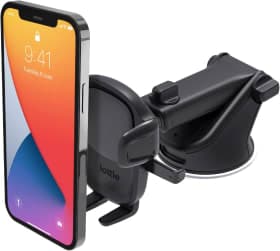
iOttie Easy One Touch 5 Car Phone Mount
Suction-cup phone mount that grips the dash for hands-free GPS the entire drive — the one item every road trip needs.
Prime eligible items may offer free shipping
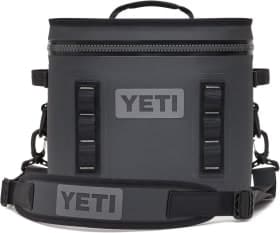
YETI Hopper Flip 12 Soft Cooler
Leakproof soft-sided cooler that holds a day of snacks and drinks cold for 24 hours in a Florida-heat car.
Prime eligible items may offer free shipping
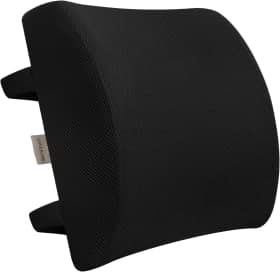
LoveHome Memory Foam Lumbar Support
Lower-back cushion that turns a 14-hour drive into something you can stand up from without limping.
Prime eligible items may offer free shipping

ComfiLife Gel Enhanced Seat Cushion
Gel-and-memory-foam seat cushion that prevents the numb-tailbone feeling on long highway stretches.
Prime eligible items may offer free shipping

Cabeau Evolution S3 Travel Neck Pillow
Wraparound neck pillow with back-of-head support so the off-shift driver actually sleeps in the passenger seat.
Prime eligible items may offer free shipping
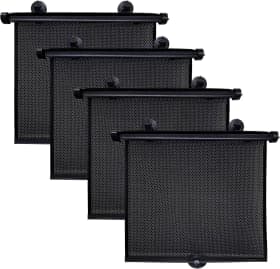
EcoNour Car Window Shades (4-Pack)
Retractable roller window shades that keep the afternoon sun off kids in the back seat and drop cabin temperature noticeably.
Prime eligible items may offer free shipping

Bedsure Sherpa Fleece Throw Blanket
Travel-size fleece throw for cold AC, passenger naps, and bonus duty as a hotel-room blanket on arrival.
Prime eligible items may offer free shipping
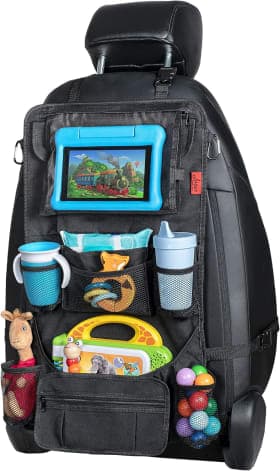
Lusso Gear Kids Car Backseat Organizer
Tablet holder, snack pockets, cup holders, and a kick-mat shield in one — the single best fix for back-seat chaos.
Prime eligible items may offer free shipping
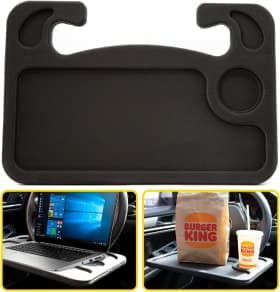
Cutequeen 2-in-1 Steering Wheel Desk
Folding tray that clips to the steering wheel so the driver can actually eat at a rest stop without hunching over a console.
Prime eligible items may offer free shipping
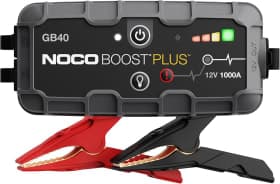
NOCO Boost GB40 Portable Jump Starter
1,000-amp lithium jump starter that revives a dead battery without a second car, doubles as a USB power bank.
Prime eligible items may offer free shipping
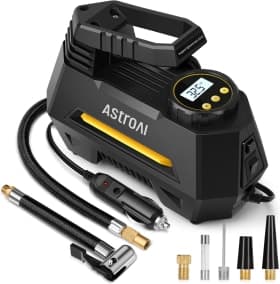
AstroAI Portable Tire Inflator
12V air compressor with a digital gauge that tops off a low tire in a rest-stop parking lot before it becomes a problem.
Prime eligible items may offer free shipping
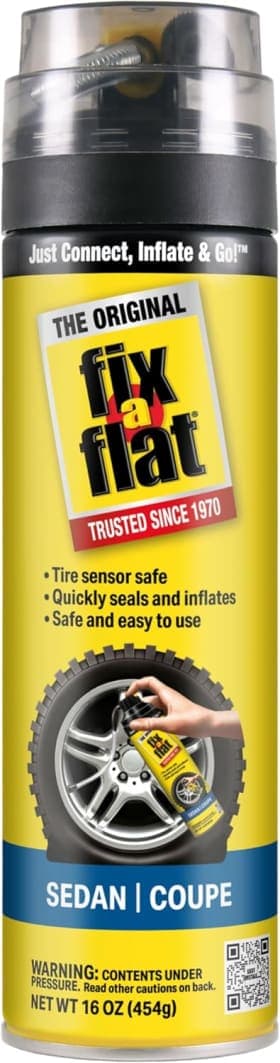
Fix-A-Flat Aerosol Tire Repair
Aerosol sealant that buys enough miles to reach a tire shop after a slow leak on a rural stretch of highway.
Prime eligible items may offer free shipping
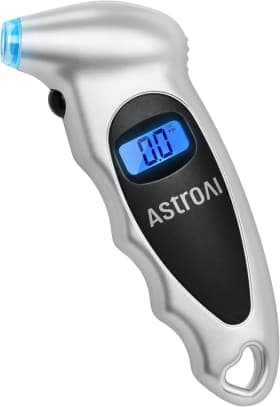
AstroAI Digital Tire Pressure Gauge
Eight-dollar digital gauge that catches an under-inflated tire before it becomes a blowout on I-75.
Prime eligible items may offer free shipping
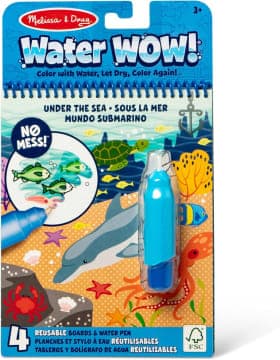
Melissa & Doug Water Wow Activity Books
Reusable water-reveal coloring books for toddlers — the rare car activity that makes zero mess and zero charging cable.
Prime eligible items may offer free shipping
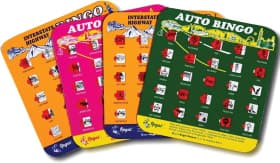
Regal Games Travel Bingo Cards
Classic shutter-style road trip bingo for spotting license plates and roadside landmarks — works without batteries or signal.
Prime eligible items may offer free shipping
Keep Planning
Useful Next Steps
These related PixieWire tools and guides connect this article to the rest of your Disney planning workflow.
Disney World Trip Planner
Build the itinerary your packing list needs to support.
Disney World Park Hours
Check park hours, Early Entry, Extended Evening Hours, parades, and fireworks.
Live Wait Times
Use current waits to plan snacks, chargers, and park-day essentials.
Park Bag Essentials
Pack the essentials for rope drop, rain, phones, snacks, and long park days.
Enjoying PixieWire?
Get the weekly Disney briefing in your inbox. Free.